The psychological benefits of speaking French
Are you ready to explore how speaking French can transform your mental landscape? Delving into the realms of psychology, this article illuminates the significant benefits that mastering the French language offers to our cognitive and emotional well-being. From enhancing memory and decision-making skills to fostering cultural connections that enrich the soul, speaking French is more than just a linguistic skill—it’s a gateway to a healthier, more interconnected mind. Join us as we uncover the profound impacts that this beautiful language can have on your psychological health.
Enhancing Cognitive Flexibility through French Language Acquisition

The Neurological Upsides of Learning French
Embarking on the journey of French language acquisition not only opens cultural doors but also offers profound cognitive benefits. Research shows that learning a new language, such as French, can enhance brain functionality in several ways. Studies indicate that bilinguals often outperform monolinguals in tasks that require cognitive flexibility— the ability to adapt behaviors and thoughts to new, changing, or unexpected events. This advantage stems from the brain’s need to manage multiple languages and choose the appropriate one according to the context, which is a form of mental workout.
French as a Catalyst for Enhanced Cognitive Functioning
French, with its complex syntactical structure and rich vocabulary, provides a particularly beneficial challenge to the brain. The process of mastering French not only requires learning and memorizing vast amounts of vocabulary but also understanding intricate grammatical rules and developing pronunciation skills. This multifaceted learning process can enhance executive function skills which include cognitive flexibility, memory, and problem-solving. Regular practice in French pushes the brain to rewire and expand its neural networks, leading to greater cognitive flexibility.
Practical Advantages in Everyday Situations
Acquiring French not only boosts the intellectual capabilities but also equips individuals with tools to better navigate through daily tasks. Bilingual individuals often show greater adeptness in switching between tasks, filtering irrelevant information, and solving complex problems efficiently. This enhanced cognitive flexibility helps in handling multiple tasks and making quick decisions in everyday life, from managing work assignments to personal scheduling.
Cognitive Health and Aging
Long-term benefits of bilingualism also include maintaining sharper cognitive functions into older age. Studies suggest that individuals who speak more than one language tend to experience a delay in the onset of cognitive decline and dementia-related diseases such as Alzheimer’s. Practicing a language like French not only enriches your present cognitive abilities but also serves as an investment in your cognitive health for the future.
Cultural Richness and Enhanced Empathy
Beyond the measurable cognitive benefits, learning French offers profound cultural exposure that broadens one’s worldview and fosters greater empathy and understanding of others. Engaging with French culture through language sharpens one’s ability to comprehend and appreciate different perspectives, thus enhancing social interactions and emotional intelligence. This cultural competence, gained through language acquisition, further feeds into and enhances cognitive flexibility.
Therefore, the voyage through French language learning is much more than acquiring a means of communication; it is nurturing a tool that enhances mental flexibility, enriches life’s perspectives, and prepares the brain for a long and healthy intellectual journey.
Boosting Mental Health with French Communication Skills
Enhancing Cognitive Flexibility
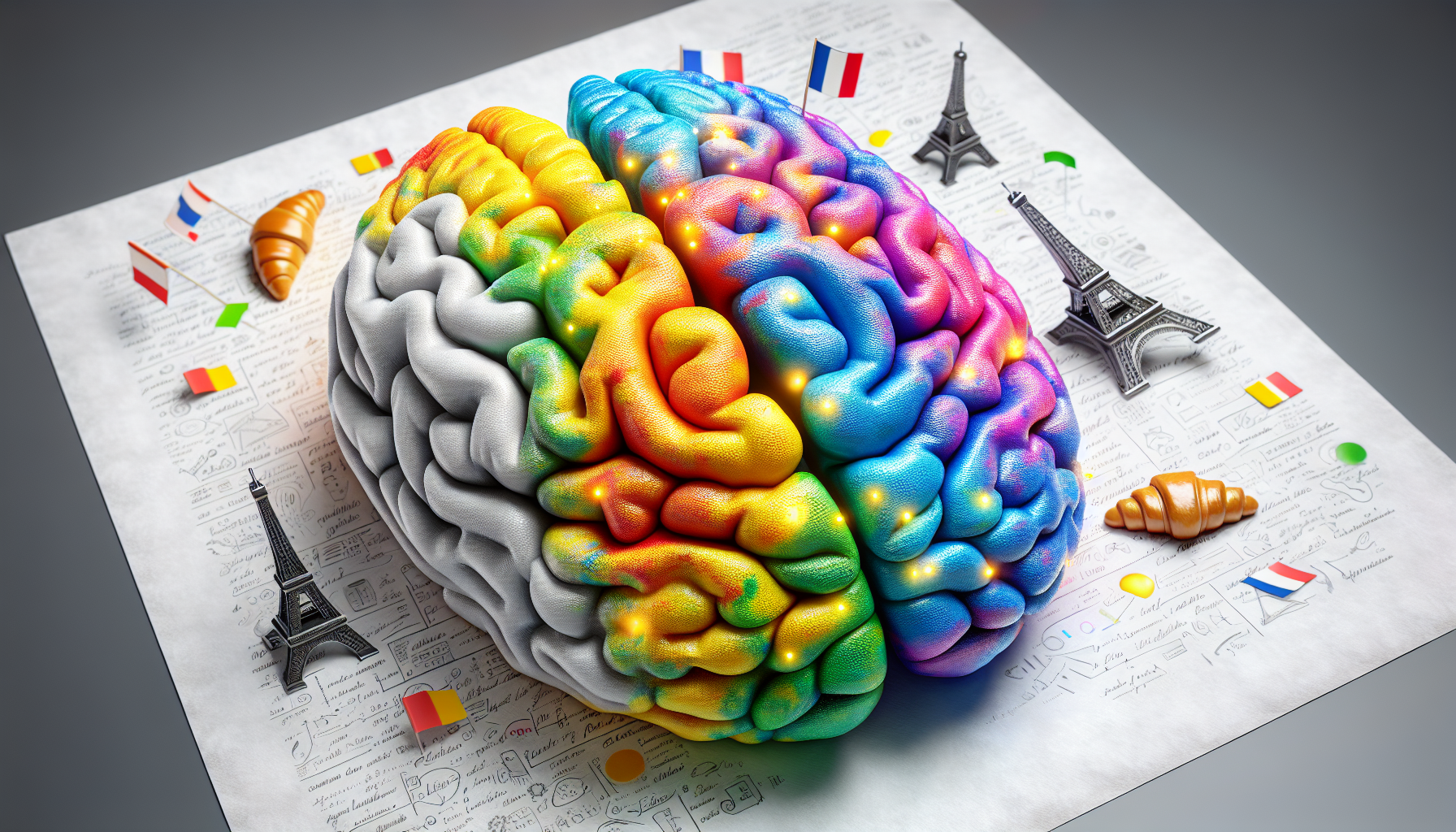
One of the premier psychological advantages of acquiring French communication skills is the enhancement of cognitive flexibility. This term refers to the mind’s ability to transition thoughts between multiple concepts or tasks. Bilingualism, especially in a nuanced language like French, requires the brain to juggle between languages, thus training it to be more adaptable and swift in processing information. Regular practice in French not only boosts this cognitive flexibility but also improves problem-solving skills and creative thinking abilities.
Alleviating Anxiety and Depression
Engaging in French conversation or immersing oneself in French culture can also lead to significant improvements in mental health, specifically in reducing symptoms of anxiety and depression. Learning and speaking French opens doors to new social interactions and community engagements. This social aspect of language learning helps in building a support network, fostering feelings of belonging and thereby decreasing feelings of isolation and depressive symptoms. Additionally, the sense of accomplishment from mastering a new language can boost self-esteem and overall mood.
Strengthening Brain Health
Communicating in French not only affects psychological well-being but also contributes to the overall health of the brain. Studies have shown that bilingual individuals often experience the onset of dementia and other cognitive decline related diseases later than monolinguals. The habitual mental challenge of switching between languages appears to build a cognitive reserve—think of it as a brain buffer that increases neural pathways and fortifies the mind against cognitive decline as we age.
Increasing Cultural Awareness and Empathy
Language is deeply intertwined with culture; thus, learning French inherently involves engaging with French culture. This engagement fosters cultural awareness and sensitivity, which are essential components of empathy. Understanding and appreciating the nuances of French culture and communication styles can lead to richer, more empathetic interactions both professionally and personally. This broader worldview can decrease ethnocentric attitudes and foster a more inclusive approach to diverse communities.
Boosting Career Opportunities
In today’s global economy, bilingualism is a highly prized skill. French, being one of the widely spoken languages across various international contexts, opens up numerous professional opportunities. Mastery of French can lead to career advancements and roles that require diplomatic, nuanced communication skills. The confidence gained from effectively communicating in French also translates into greater assertiveness in professional settings, further enhancing career prospects.
Ultimately, the pursuit of French communication skills is much more than learning a language; it is an enriching endeavor that promotes a healthier mind and broadens personal and professional horizons. Engaging regularly with the French language and culture not only enhances cognitive abilities but also enriches emotional health, proving that language learning is a robust tool for personal and professional growth.
Cultural Enrichment and Emotional Intelligence Development

The Impact of Language Learning on Cultural Enrichment
Embarking on the journey of learning a new language, particularly French, opens a plethora of opportunities for cultural enrichment. Firstly, it provides a deeper understanding of cultural contexts and traditions that are intricately woven into the language. Engaging with French not only involves learning vocabulary and grammar but also immersing oneself in the ways of life, expressions, and idiomatic nuances that define French-speaking societies.
Moreover, language learning extends beyond textbooks and classrooms. It promotes interactions with native speakers and fellow learners, which enhances cultural exchange. Such interactions can lead to a refined appreciation of differences and similarities between cultures, fostering a global mindset and reducing cultural barriers. Whether through traditional meals, celebrations, or everyday conversations, every aspect of culture enriches a learner’s perspective, contributing to a well-rounded global understanding.
Enhancing Emotional Intelligence Through Language Learning
Learning French also substantially contributes to the development of emotional intelligence (EI). EI is the ability to perceive, evaluate, and respond to both one’s own emotions and the emotions of others. Language learning challenges individuals to communicate and express themselves in entirely new ways, often under challenging circumstances. This fosters empathy, as learners must understand and convey feelings accurately, both in verbal and non-verbal forms.
Furthermore, the process of acquiring a new language like French can be replete with moments of frustration and misunderstanding. However, these challenges are opportunities for growth. They teach resilience and adaptability, key components of emotional intelligence. Regular interaction and communication in French require learners to develop patience, improve their listening skills, and practice empathy actively, which are all crucial EI skills.
Additionally, emotional intelligence is enhanced by the confidence gained from mastering a new skill. As learners advance in their French language abilities, they experience a boost in self-esteem and confidence, which is fundamental to emotional intelligence.
Applications in Real-world Scenarios
The skills developed through learning French find their application in various real-world scenarios. For professionals working in international environments, the ability to navigate cultural nuances and demonstrate high emotional intelligence can lead to more effective communication and business success. In social settings, these skills enhance personal relationships, enabling individuals to connect more deeply with people from diverse backgrounds.
In summary, the psychological benefits of learning French include profound cultural enrichment and a significant enhancement of emotional intelligence. These impacts not only foster personal growth but also equip learners with the necessary skills to thrive in a globally connected world. So, in a real sense, learning French is not just about mastering a language—it’s about transforming one’s world perspective and interpersonal abilities.
Long-Term Brain Health Benefits from Bilingualism in French
Learning a second language, such as French, offers more than just an ability to communicate in a vibrant and culturally rich language. Beyond linguistic abilities, bilingualism influences cognitive processes and significantly impacts long-term brain health. Research in neuroscience and cognitive psychology consistently highlights multiple benefits, from enhanced cognitive functions to a delay in the onset of dementia-related symptoms. Exploring these benefits provides compelling reasons for anyone considering embracing French as a second language.
Enhanced Cognitive Flexibility
Bilingual individuals often exhibit increased cognitive flexibility. This means they possess an enhanced ability to switch between tasks and think about multiple concepts simultaneously. Learning French as a second language challenges the brain to recognize and negotiate meaning, engage in complex reasoning, and manage multiple language systems. This mental exercise strengthens cognitive muscles, leading to better multitasking skills and an improved ability to solve complex problems.
Better Memory and Mental Agility
Frequent use of a second language like French requires the brain to recall vocabulary, rules, and phrases, thereby exercising memory functions. This constant cognitive activity strengthens the brain’s memory systems, leading to quicker recall and sharper memory. Additionally, bilingualism has been linked to mental agility—being bilingual often means a person can process information more rapidly and accurately, making them adept at making quick decisions.
Delay in the Onset of Dementia and Alzheimer’s Disease
One of the most significant long-term health benefits of bilingualism, including French, is the potential delay in the onset of dementia and Alzheimer’s disease. Studies have suggested that bilingual individuals may experience the onset of dementia up to five years later than monolinguals. The theory behind this is that the constant mental juggling between languages offers a form of mental exercise that keeps the brain engaged and resilient, thereby staving off the development of dementia-related symptoms.
Increased Resistance to Cognitive Decline
Beyond the implications for dementia, regular use of a second language also contributes to a general resistance against the natural cognitive decline that comes with aging. Linguistically diverse experiences tend to enhance brain reserve, an important factor in how well the brain functions as it ages. This means that routine French usage can contribute to maintaining an active and healthy brain well into older age.
Cultural Cognition and Empathy
Speaking multiple languages also influences one’s cultural cognition—the ability to perceive and react to cultural and emotional contexts of different languages. Bilingual individuals, including French speakers, often show greater empathy and understanding toward other cultures. This global perspective is linked to broader social understanding and emotional skills, which positively impacts mental health and cognitive empathy, further enriching the brain’s capacity to navigate complex social environments.
In conclusion, the cognitive and mental health benefits of learning and using a second language like French are profound. From enhancing memory and cognitive flexibility to delaying significant neurological diseases, bilingualism appears to be a robust method of fostering long-term brain health. Engaging with French not only opens up new cultural avenues but also profoundly benefits mental well-being and cognitive resilience. Considering these benefits, investing time in learning French could be seen as not just an educational experience, but also as an important component of a healthy lifestyle.