Quels sont les niveaux de compétence en Français Langue étrangères (FLE) ?
Are you curious about your proficiency level in French as a Foreign Language (FLE)? Whether you are a beginner or aiming to polish your advanced skills, understanding the different levels of competency in FLE can greatly enhance your learning journey. This article details the structured proficiency levels from absolute beginner to advanced mastery, providing a clear roadmap for learners to assess their skills and set concrete goals. Dive in to discover where you stand and how you can elevate your French language capabilities!
Understanding the CEFR Levels for FLE
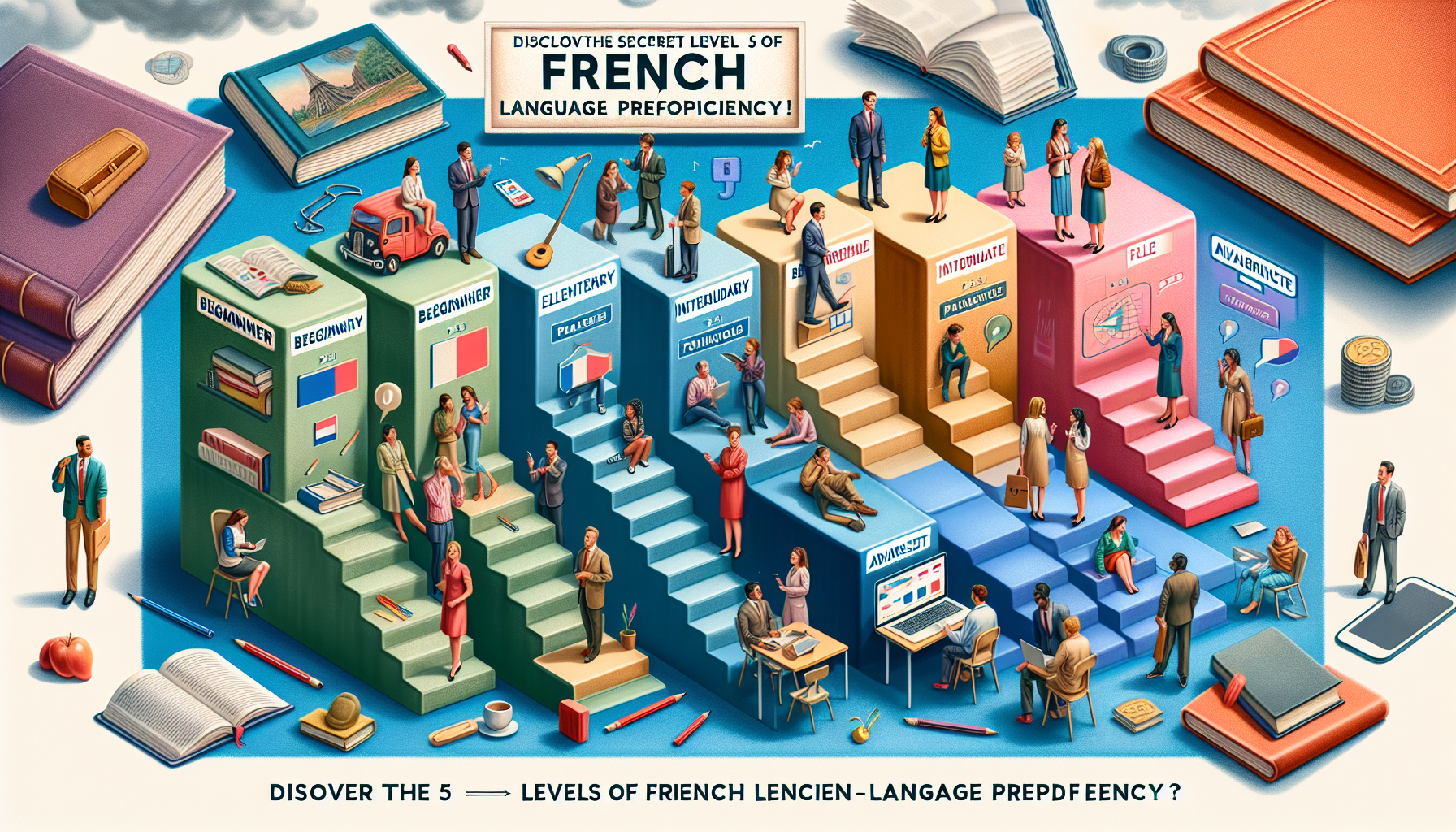
The Common European Framework of Reference for Languages (CEFR) is a guideline used to describe achievements of learners of foreign languages across Europe and, increasingly, in other countries. It’s essential for learners and educators in French as a Foreign Language (FLE) to understand these levels as they provide a clear and standardized way of measuring language proficiency.
The CEFR divides language proficiency into six levels which are further grouped into three bands: A (Basic User), B (Independent User), and C (Proficient User). Each level assesses four language skills: listening, reading, speaking, and writing. Understanding these levels can help learners set realistic goals, monitor their progress, and choose appropriate learning materials.
CEFR Levels Described
A1 – Breakthrough or beginner: At this initial stage, learners can interact in a simple way, ask and answer basic questions about personal details, and interact in a simple way provided the other person talks slowly and is prepared to help.
A2 – Waystage or elementary: Learners can understand sentences and frequently used expressions related to areas of most immediate relevance (e.g., very basic personal and family information, shopping, local geography, employment).
B1 – Threshold or intermediate: At the B1 level, users become able to produce simple connected text on topics that are familiar or of personal interest. They can describe experiences, events, dreams, hopes, and ambitions, and briefly give reasons and explanations for opinions and plans.
B2 – Vantage or upper intermediate: Learners at this level can understand the main ideas of complex text on both concrete and abstract topics, including technical discussions in their field of specialization. They can interact with a degree of fluency and spontaneity that makes regular interaction with native speakers quite possible without strain for either party.
C1 – Effective Operational Proficiency or advanced: Users can understand a wide range of demanding, longer texts, and recognize implicit meaning. They can express ideas fluently and spontaneously without much obvious searching for expressions.
C2 – Mastery or proficiency: At the highest level of language proficiency in the CEFR model, learners can understand virtually everything heard or read with ease. They can summarize information from different spoken and written sources, reconstructing arguments and accounts coherently.
How to Use CEFR Levels for Learning French
To effectively use CEFR levels as a guideline for studying French, learners should first determine their current level through an official evaluation or a self-assessment tool. Once the current level is identified, consistent and focused learning can be planned based on desired proficiency goals. Integrating various forms of learning, like reading French literature, participating in conversation classes, and practicing with multimedia tools are beneficial approaches.
It is also recommended to revisit core language skills systematically at every level, gradually increasing complexity in reading and listening materials, and actively seeking opportunities for speaking and writing.
For learners eager to study French in France, immersive experiences like those offered by the French Institute in Aix-en-Provence, can significantly enhance your learning curve, providing real-life contexts to apply language skills extensively and learn culturally relevant expressions and nuances.
Ultimately, a balanced mix of systematic learning, practical application, and cultural immersion ensures a solid and enjoyable mastery of French, paving the way for successful communication in both personal and professional settings.

Pourquoi apprendre le Français Langue étrangères (FLE) ?
Learning French as a Foreign Language (FLE) opens a world of opportunities, enhancing both your personal and professional growth. From accessing rich cultural treasures to boosting career prospects in international arenas, mastering French can profoundly transform your global understanding and…
Exploring Methodologies for Assessing FLE Competence

Assessing proficiency in French as a Foreign Language (FLE) necessitates a multifaceted approach, integrating various methodologies to accurately determine a learner’s linguistic abilities. The methodologies employed for this purpose range from standardized testing to dynamic assessments, each offering unique insights into the learner’s proficiency levels.
Standardized Testing
Standardized tests are one of the primary methods used to assess language competency. These tests provide a uniform framework, enabling educators to evaluate a wide range of language skills including listening, speaking, reading, and writing. Examples of such tests include DELF (Diplôme d’études en langue française) and DALF (Diplôme approfondi de langue française), which are organized by the French Ministry of Education. These exams are designed to assess a learner’s ability to use French in real-life situations and are recognized internationally.
Oral Proficiency Interviews
Oral proficiency interviews (OPI) are another critical tool in assessing FLE competence. This method involves a one-on-one interaction between a certified examiner and a learner. The conversation is structured to progressively advance in difficulty, requiring the learner to demonstrate their ability to communicate effectively in French. The OPI focuses on spontaneity and the ability to respond to a variety of conversational contexts, offering a realistic measure of oral language proficiency.
Portfolio Assessments
Portfolio assessments provide a comprehensive view of a learner’s capabilities by compiling various work samples over time. These may include writings, audio recordings, video presentations, and other practical evidence of language use. Portfolios allow educators to observe improvements and the application of language skills in diverse contexts. This type of assessment encourages ongoing learning and reflection, making it particularly suited for educational settings that emphasize progressive development.
Performance-Based Assessments
Performance-based assessments evaluate language skills through tasks that mimic real-world scenarios. These might involve role-plays, group discussions, or presentations, all of which require the learner to actively use the French language. Such assessments are valuable as they emphasize the practical application of language skills rather than the theoretical knowledge, closely mirroring the challenges faced in everyday communications.
Technology-Enhanced Assessments
With the rapid advancement of technology, digital platforms are increasingly used to assess FLE competence. These technologies offer interactive and adaptive testing experiences, such as computer-based examinations or online speaking tests using AI evaluators. Utilizing technology in language assessment not only makes the process more engaging for learners but also allows for a more flexible and accessible evaluation system.
Each method for assessing FLE competence has its distinct advantages and can be chosen based on the specific educational goals and contexts. An integrative approach that combines multiple assessment methodologies typically provides the most holistic understanding of a learner’s language abilities. Such diverse evaluation strategies ensure that learners are tested on all linguistic fronts, providing a balanced and comprehensive assessment of their proficiency in French as a Foreign Language.

Comment apprendre le Français Langue étrangères (FLE) efficacement ?
Embarking on the journey to master French as a Foreign Language (FLE) can be both thrilling and challenging. In this article, we delve into effective strategies tailored to enhance your learning experience, ensuring you grasp French faster and more efficiently.…
The Impact of Cultural Nuances in FLE Proficiency

Understanding French as a Foreign Language (FLE) involves more than just mastering grammar and vocabulary. Cultural nuances play a significant role in advancing from one FLE proficiency level to the next. Cultural insights can provide a deeper context for language use, influencing language learning effectively.
Defining Cultural Nuances in FLE Learning
Cultural nuances refer to the subtle cultural details that define social norms, behaviors, and the everyday use of language in a French-speaking context. This includes understanding regional dialects, slang, humor, nonverbal communication, and social etiquettes. Knowledge of these aspects is crucial for achieving more than just a superficial understanding of the language.
From Basic to Advanced Levels: The Role of Culture
At the elementary level (A1-A2), learners are typically exposed to a very structured and standard form of French. However, as they progress to intermediate levels (B1-B2), the inclusion of cultural content significantly increases, helping students understand and participate in more complex interactions that are influenced by cultural contexts. By the time students reach advanced levels (C1-C2), their ability to understand and employ nuanced language reflecting cultural subtleties becomes essential for full fluency.
Examples of Cultural Nuances Influencing FLE Proficiency
- Idiomatic Expressions: Understanding phrases like « C’est la vie » (That’s life) or « Ça ne casse pas trois pattes à un canard » (It’s nothing to write home about) requires knowledge of cultural context that goes beyond literal translations.
- Historical References: Many conversations and texts might include references to French history or literature which can profoundly influence the comprehension and engagement in communication.
- Nonverbal Communication: French communication relies heavily on body language and facial expressions, and interpreting these correctly can alter the meaning of an exchange.
- Social Codes: Social interactions in French culture involve a set of unspoken rules, for instance, the use of tu versus vous, which can only be grasped fully through cultural immersion or targeted cultural lessons.
Integrating Cultural Insights in FLE Courses
At the French Institute in Aix-en-Provence, we incorporate cultural teachings at every level of our FLE courses. Students engage with films, literature, and interactive activities that mirror real-life situations encountered in French society. This approach helps not only in understanding the language but also in appreciating its cultural depth, ultimately leading to a more authentic and effective communication skill set.
Impact on Language Proficiency Tests
In language proficiency tests such as DELF and DALF, an understanding of cultural nuances can greatly aid in sections like oral expression and comprehension. Test takers who are aware of cultural contexts tend to perform better as they can understand the subtleties in dialogs or texts, providing responses that are not only correct linguistically but also contextually appropriate and culturally informed.
Incorporating cultural nuances into French language learning enriches the educational experience and equips learners with the understanding necessary to navigate not just the language but also the rich tapestry of French social life and customs. At our institute, we ensure that students receive a well-rounded education that prepares them not only for exams but for real-world French interaction, blending language learning with cultural immersion.
Où apprendre le Français Langue étrangères (FLE) en ligne ?
Are you eager to master French as a Foreign Language (FLE) but unsure where to start? Dive into our comprehensive guide where we unveil the top online platforms and resources that make learning French accessible, interactive, and enjoyable. Whether you’re…
Strategies for Enhancing FLE Learning Outcomes
French as a Foreign Language (FLE) education faces unique challenges, particularly when it comes to ensuring effective learning outcomes. To address these challenges, educators and learners alike can employ various strategies tailored to enhance FLE proficiency and comprehension.
Immersive Language Exposure
One of the most effective ways to improve FLE learning outcomes is through immersive language exposure. This strategy involves surrounding the learner with French in a variety of contexts and settings. Techniques include:
- Listening to French music and radio broadcasts.
- Watching French films and television programs with or without subtitles.
- Participating in conversations with native French speakers.
These immersive experiences help reinforce the language structurally and culturally, making the learning process more relational and context-driven.
Interactive Learning Tools
Utilizing technology can greatly enhance FLE learning. Interactive learning tools and resources make the process engaging and can personalize the learning experience. Some beneficial tools include:
- Language learning apps that adapt to individual learning speeds and styles.
- Online courses that offer real-time feedback and interactive exercises.
- Virtual reality (VR) platforms that simulate real-life interactions in French.
These technologies not only provide unlimited access to educational content but also facilitate a more hands-on approach to learning the French language.
Structured and Regular Practice
Consistency is key in language acquisition. Structured and regular practice helps in solidifying the language skills. This could involve:
- Daily reading and writing exercises.
- Weekly speaking engagements with peers or tutors.
- Regular testing to evaluate progress and identify areas needing improvement.
This routine establishment helps in building confidence and fluency, two critical components in language learning.
Real-World Application
A practical application of learning in real-world situations can dramatically boost FLE proficiency. Encouraging students to use French in real-life scenarios helps them to apply what they’ve learned in a natural setting, thereby improving their language skills effectively. Suggestions include:
- Shopping at French-speaking businesses.
- Ordering food in French restaurants.
- Attending French cultural events or festivals.
Each interaction in these settings provides valuable practice and reinforces learning through practical engagement.
Cultural Integration into Curriculum
Understanding the cultural context of a language enriches the learning experience. Incorporating elements of French culture into the FLE curriculum can help learners grasp the idiomatic and contextual usage of the language. This can be achieved by:
- Studying French literature and cinema.
- Exploring the history and cultural traditions of French-speaking regions.
- Participating in French cooking classes or wine tasting sessions.
These activities not only make learning more enjoyable but also deepen the connection with the language and its nuances.
By integrating these strategies into the FLE learning plan, educators can provide a comprehensive educational experience that is both effective and enjoyable for students. At the French Institute in Aix-en-Provence, we are committed to employing these methods to enhance learning outcomes and help our students achieve fluency in French.